- Best for
- Arguably India’s best place to watch and photograph leopards · Stunning granite hill habitat · Culture of Rabaris, the local tribe · Human-wildlife coexistence · Picturesque Jawai Dam · Crocodiles · Birdlife · Excellent photography productivity
- Best months
- October to April
- Ideal duration
- 4 nights
- Getting there
- By air to Udaipur or Jodhpur and then by road to Jawai.
Introducing Jawai
A land of no fences. Or defences.
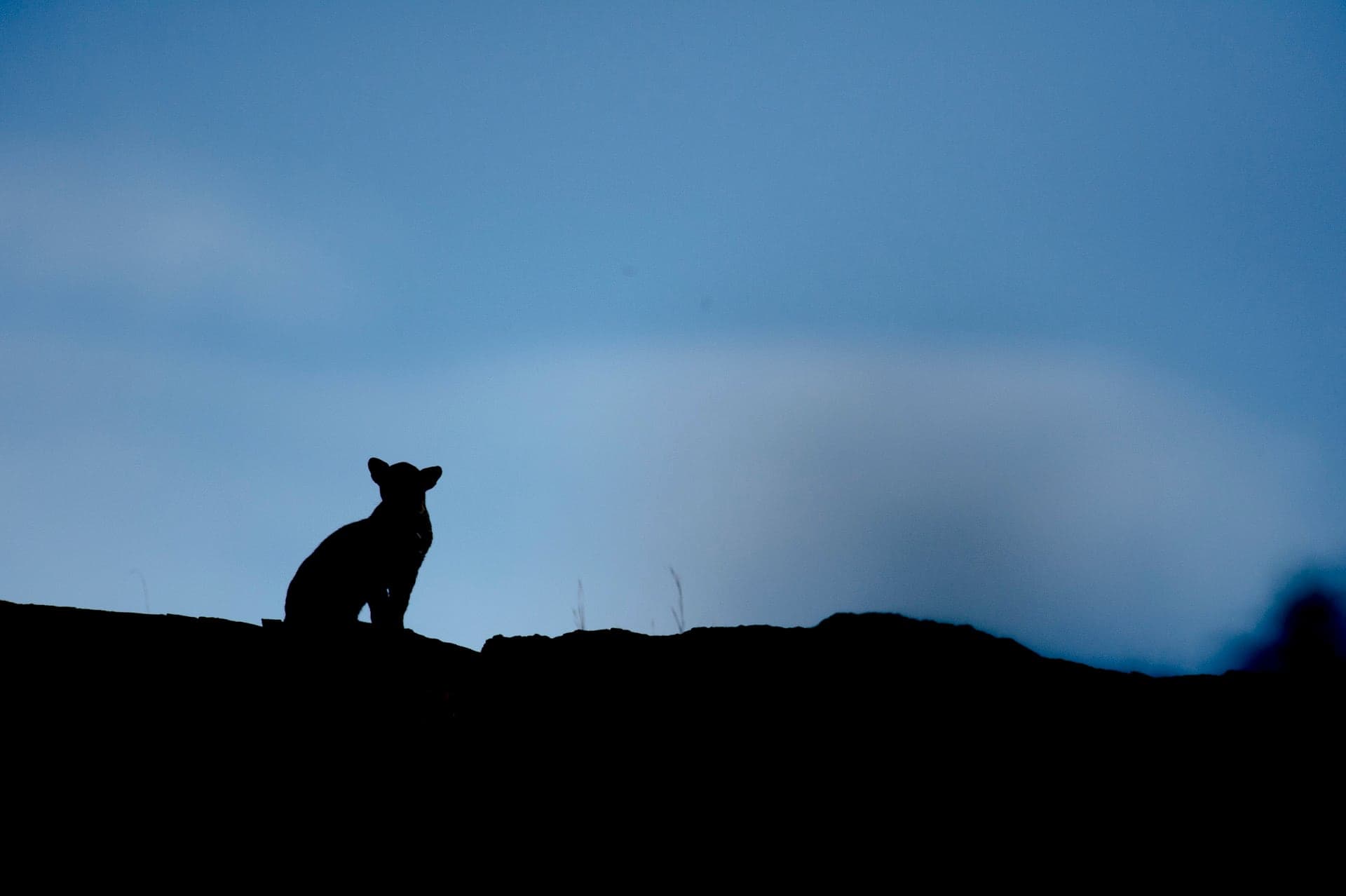
Jawai is not the India of tiger reserves. There are no thick forests, no fences or gates here. Instead, giant granite outcrops rise from a dry, open landscape, and their weathered forms are broken by caves and crevices: ancient rocks, shaped over immense stretches of geological time. And inside them live leopards. The cats disappear into the caves during the heat of the day, emerge onto the rocks as if to survey their surroundings, and live in a landscape that is also home to livestock and people. And there’s no contradiction.
The Jawai experience is as unique as the word unique’s meaning. The leopard is not an intruder in the human-centred perspective, it is a part of life in its entirety without strict lines between the human and the more-than-human.
Field notes
Three ways to readJawai.
A concise field guide to the landscape, its daily rhythm and the encounters that define it.
The landscape
A wilderness without boundaries
The wild does not stop where the village begins. This is what makes Jawai so different. In most places, we think of wildlife and human habitation as opposing forces. Here, the distinction is far less clear. Rabari pastoral communities have lived and grazed their domestic animals in this landscape for generations. Their relationship with the leopard has endured…
Photo journal
Jawai,in frames.
Open any photograph to explore the collection in full screen.
Destination combinations
Better together.
Considered routes that place Jawai in a wider journey without rushing either landscape.
 01
01Jawai & Ranthambhore
Leopards and tigers. Two apex big cats in two markedly different habitats.
Start planning 02
02Jawai, Spiti & Ranthambhore
A grand tour through three breathtaking habitats in search of snow leopards, tigers and leopards.
Start planningYour private journey
Make your own Jawai plan.
Tell us what draws you here. We will shape the right season, access, pace and places into one coherent private journey.
Begin planningGood to know
Question, meet answer.
Why is Jawai famous for leopards?
Jawai’s distinctive granite landscape provides caves and rocky refuges for leopards, while the surrounding human landscape has allowed a unique degree of coexistence between the cats and local Rabari pastoral communities. Our own gamut of literature on Jawai, including the book by our founder Kairav Engineer, The Ghosts of the Granite Hills, highlights this long-standing relationship of reverence and restraint.
Will I definitely see a leopard?
No responsible wildlife operator can guarantee a wild-animal sighting anywhere. Jawai is renowned for its leopard encounters, but the experience should be approached as wildlife observation rather than a guaranteed engineered sighting.
What makes Jawai different from a tiger reserve?
The fundamental difference is the landscape and the relationship with people. Jawai is not experienced primarily as a conventional forest reserve. Leopards inhabit granite hills and caves in a landscape also used by pastoral communities. That makes the wildlife-human relationship part of the safari itself.
Can I meet the Rabari community?
A thoughtfully arranged cultural experience can indeed add great depth to your Jawai journey. It should, however, be approached respectfully and on the community’s terms rather than as a staged cultural production.
What other wildlife can I see?
Depending on the area and season, the wider Jawai landscape offers opportunities for nilgai, chinkara, wild boar, sambar, chital, langurs, crocodiles and substantial birdlife. Jawai's wildlife experience extends well beyond leopards.
Is Jawai good for photography?
Exceptional, we would say. The combination of leopards, ancient granite, dramatic light, open landscapes and human activity creates opportunities for environmental wildlife images that are quite different from conventional safari photography.
How many nights should I spend?
Three nights is a good starting point. Four nights allows more time for photography, exploring the landscape and experiencing Jawai beyond the leopard safari.