- Best for
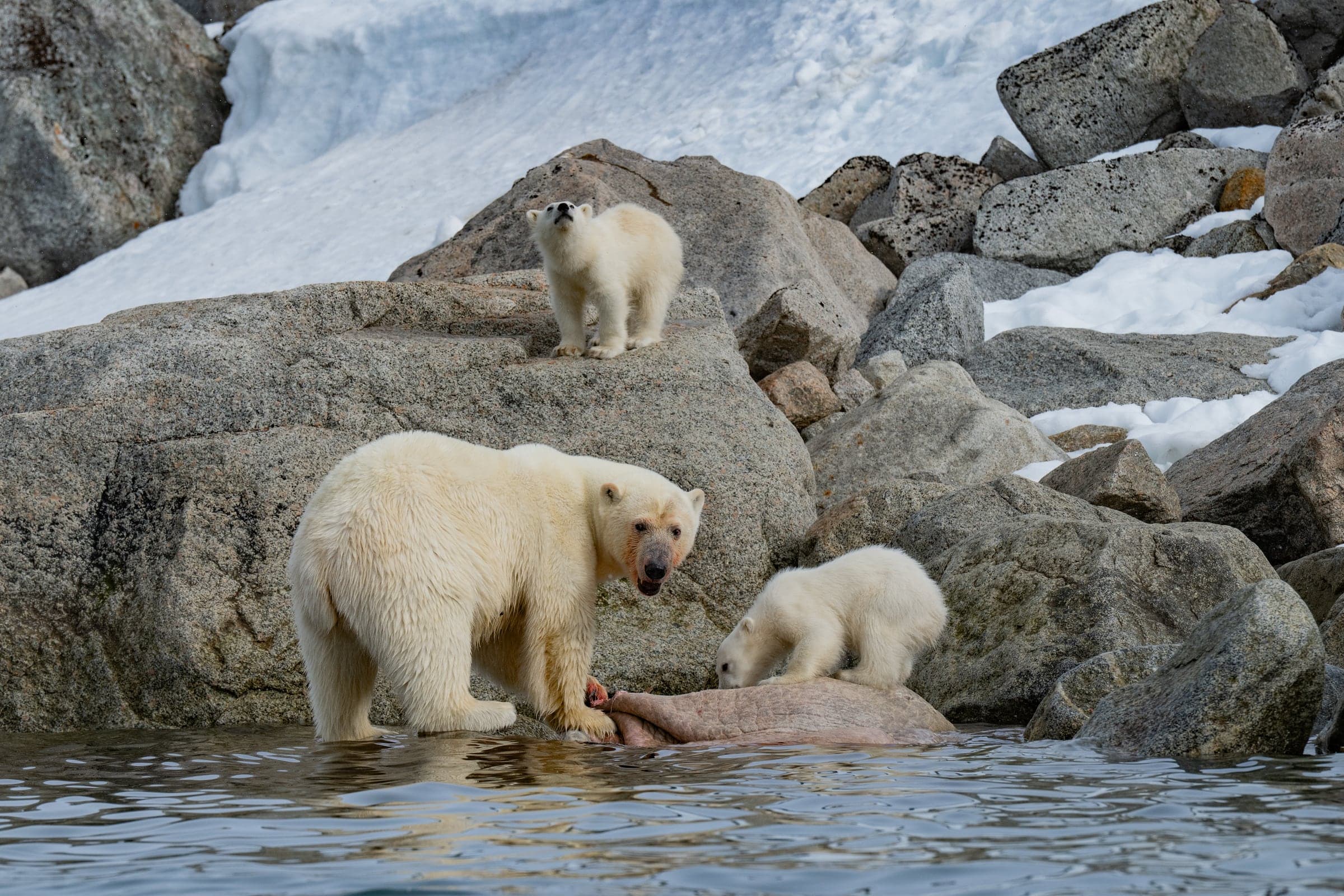
- Cruise amidst immense glacier fronts · Polar bears, seals, walruses in their coastal habitat · The ever changing Arctic light · Seabirds and other wildlife
- Best months
- June to August
- Ideal duration
- 7–10 nights for an expedition voyage; 4–5 nights for a winter stay around Longyearbyen.
- Getting there
- Fly to Longyearbyen via Oslo or Tromsø
Introducing Svalbard
The polar opposite of ordinary.
Hemming the Arctic Ocean, Svalbard is a nook comprising glaciers, sea ice and sprawling silences. You need to be there to comprehend its singular reality. The Arctic archipelago is made of fjords, mountains, tundra and polar desert, but its character alters constantly with the light, the ice, the sea and the season. Imagine walruses hauled out on ice, reindeer crossing as if drawing momentary horizons, or a bird circling above a cliff. Now imagine this becoming your reality. Because it can.
Svalbard lies between mainland Norway and the North Pole, with Longyearbyen on Spitsbergen serving as the principal gateway. From here, journeys can move by boat, Zodiac, snowmobile or on foot, depending on the season and conditions. There are only around 40 kilometres of roads here. A visit here therefore means a particular kind of traveller: someone willing to watch patiently and not rush, and to accept that the Arctic decides much of the day.
Field notes
Three ways to readSvalbard.
A concise field guide to the landscape, its daily rhythm and the encounters that define it.
The landscape
The pulse of the pole
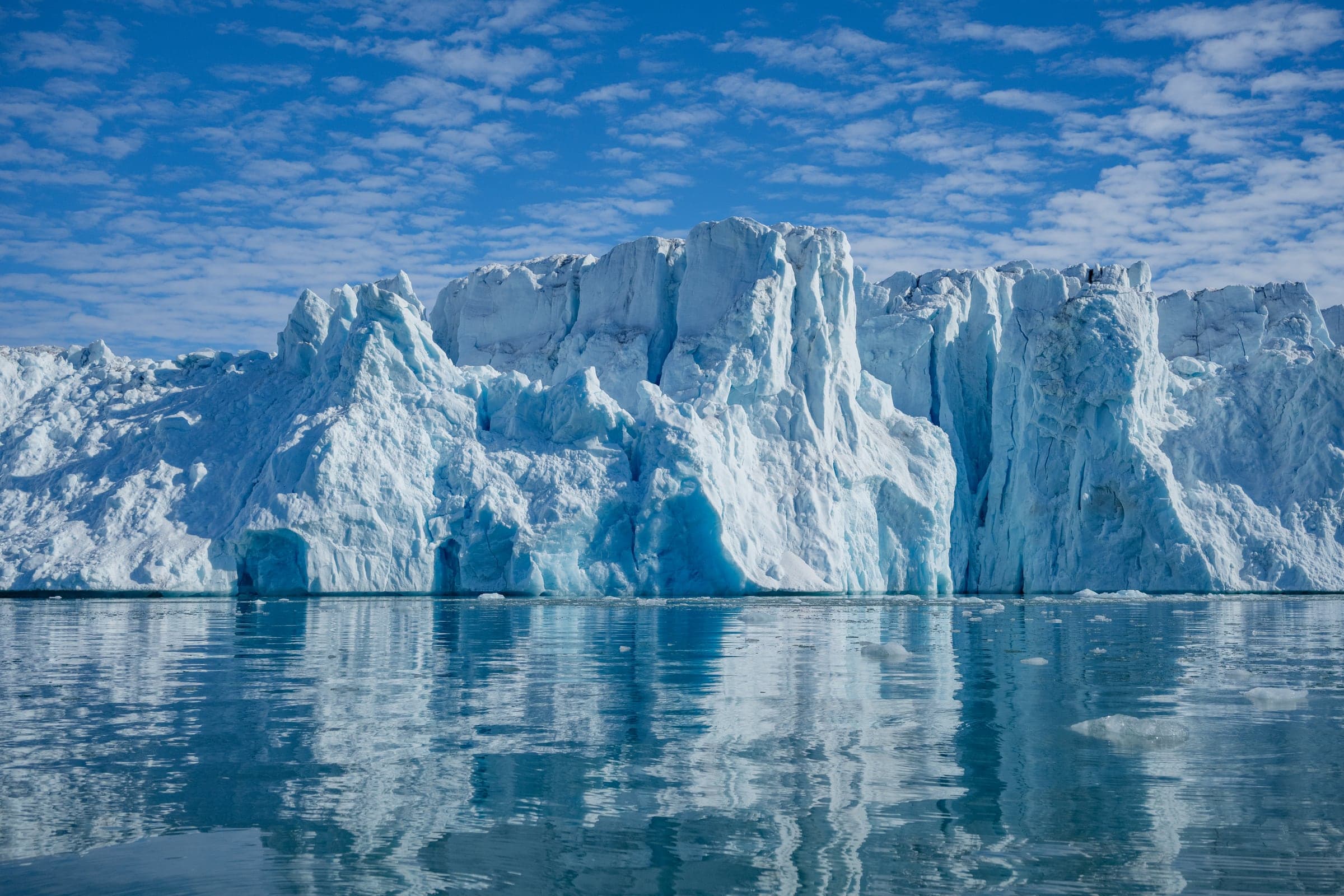
Svalbard holds several Arctic worlds in a relatively small area: glacier fronts, fjords, sea-ice, coastal waters, steep bird-cliffs and high mountain-valleys. In summer, it becomes alive with plants and fungi adapted to a very short season of growth. The nutrient-rich waters draw marine life towards the ice-edge. In winter, darkness envelopes the landscape, which means few changes in…
Photo journal
Svalbard,in frames.
Open any photograph to explore the collection in full screen.
Destination combinations
Better together.
Considered routes that place Svalbard in a wider journey without rushing either landscape.
 01
01Svalbard & Tromsø
A natural mainland Arctic chapter before or after the remote landscape of Svalbard.
Start planning02Svalbard & Mainland Norway
Contrast Norway's accessible northern landscapes with the geographical isolation of the High Arctic.
Start planningYour private journey
Make your own Svalbard plan.
Tell us what draws you here. We will shape the right season, access, pace and places into one coherent private journey.
Begin planningGood to know
Question, meet answer.
When is the best time to visit Svalbard?
There is no single best season. May to September is the principal period for expedition cruising, and the greatest summer diversity of wildlife, while late winter and spring offer snow, returning light and winter activities around Longyearbyen. Your ideal dates should follow your experience-priorities rather than a generic calendar.
How long should I stay in Svalbard?
For an expedition voyage, 7 to 10 nights provides useful time in the field and allows some flexibility around weather and sea conditions. A shorter 4–5-night stay can work well when the focus is Longyearbyen and winter activities. We confirm the final duration against the specific expedition and route.
How do I reach Svalbard?
Longyearbyen is reached by air from mainland Norway, principally via Oslo or Tromsø. Flights from Oslo take around three hours and those from Tromsø around one-and-a-half hours. Svalbard lies outside the Schengen area, so identity control applies and you should carry the required passport or national identity document.
Can I see a polar bear in Svalbard?
A polar bear encounter is possible but is neither predicted nor promised. Svalbard is not a destination for organised polar-bear safaris, and animals must be photographed from a respectable distance. The most responsible approach is to travel with experienced professionals and allow wildlife encounters to happen on wildlife’s terms.
Is Svalbard suitable for photographers?
Most certainly, particularly for photographers interested in wildlife within their larger landscape. The Arctic light, glaciers, sea ice, seabirds and marine mammals are your varied subjects, while expedition travel creates opportunities to work from boats and regulated landing sites. Conditions can be demanding, so weather protection and careful equipment management are important.