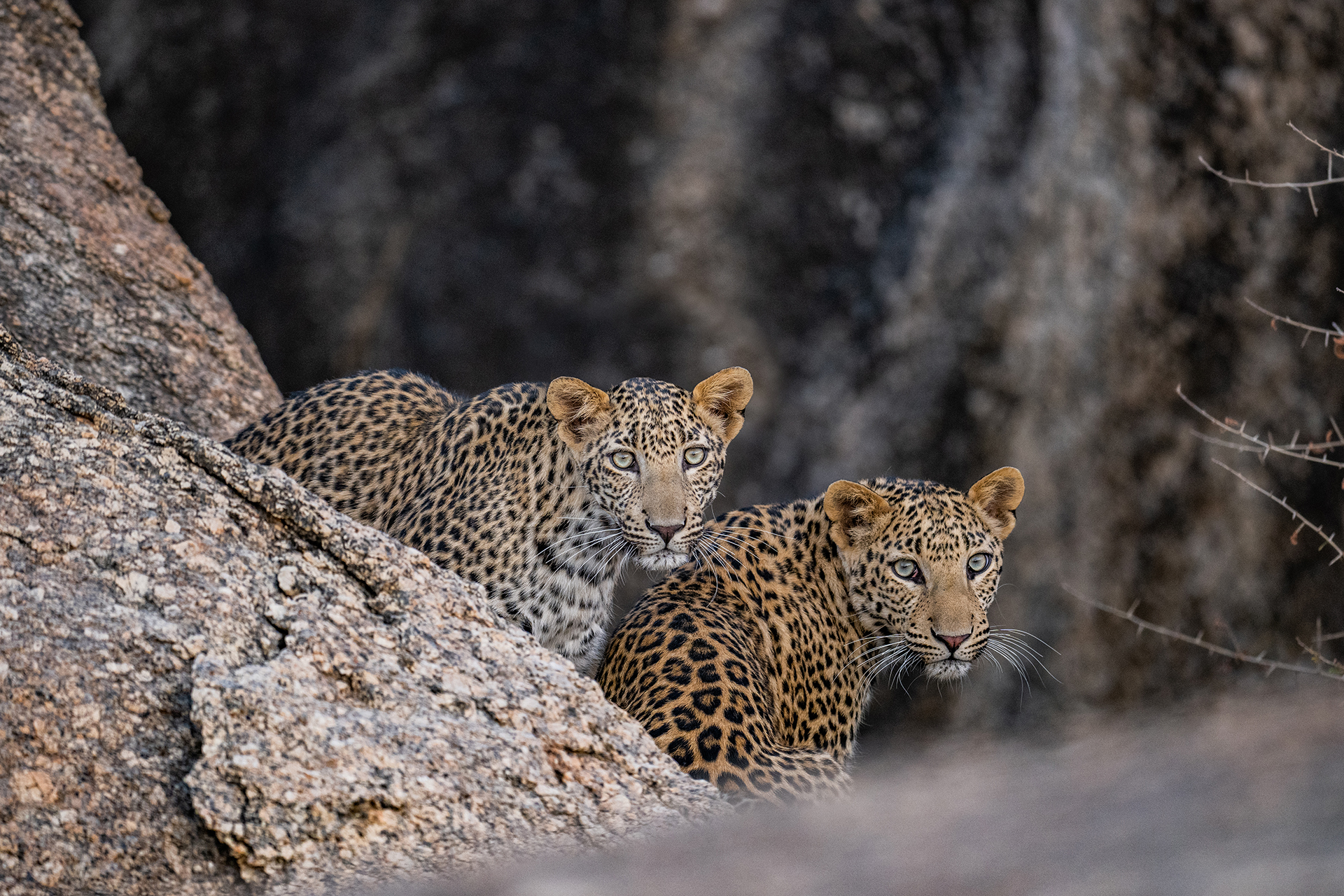
Beyond India's celebrated big cats, smaller felines inhabit wetlands, grasslands, deserts and granite country with remarkable discretion.
India is a land of feline fervour. It is one of the richest landscapes on the planet to experience the beauty and quiet authority of wild cats. The tiger, regal and commanding, and the leopard, graceful and elusive, have long occupied the centre of that narrative. Yet beyond their presence lies another world, one that exists in fragments, in fleeting glimpses, in the spaces between certainty. India’s small cats exist on the edges of the wild, elusive and often overlooked. Encountering them is never just about luck. It calls for patience, a trained eye, and an understanding of the landscapes they quietly inhabit.
With deep on-ground experience, Safari Crafters offers a rare advantage, guiding you to the right habitats and moments where the possibility of these encounters becomes real. Science, even today, is only beginning to understand what the land has always held. A recent nationwide study by the National Tiger Conservation Authority reveals that India is home to at least nine species of small cats, spread across forests, wetlands, grasslands and even human-dominated spaces. What is striking is not just their diversity, but their invisibility. Despite thousands of camera traps across the country, these animals remain among the least understood carnivores in India. This journey begins with that understanding.
That to see them, one must first learn to wait. On the fringes of Kolkata, in its wetlands where villages blur into unassuming towns, these elusive beings endure. Quiet and almost spectral, they move like shadows against an urban backdrop. They linger by still ponds and waterbodies, present yet rarely seen. A reed stirs in unmoving air. A fleeting silhouette appears, then slips back into dusk From water, the land opens into the grasslands of Velavadar. It feels expansive, almost exposed, yet holds concealment of another kind. The jungle cat thrives here, its form dissolving into grass that moves endlessly with the wind.
Identified as one of the most widespread small cats in the country, its strength lies in its ability to adapt. It does not hide from the openness. It becomes part of it. Further west, Jawai rises from the plains, its granite formations breaking the horizon in deliberate shapes. Known for its leopards, it also holds one of the smallest and most elusive predators in the world, the rusty-spotted cat. Here, scale becomes deceptive. Massive rocks hold minute life. The smallest predator moves through the largest silence. Days stretch longer. Nights grow watchful. The search becomes less about pursuit and more about attention. Every shadow carries potential, and most reveal nothing.
That, too, becomes part of the experience. Beyond this, the land simplifies itself into the elemental vastness of the Desert National Park near Jaisalmer. Wind, sand, distance. Life persists here, but only just. The desert cat belongs to this restraint. Its movements are measured, its presence fleeting. Its pale coat dissolves into the land until form and landscape become indistinguishable.. Across these landscapes, a pattern begins to emerge. These cats are not isolated. They exist alongside humans, alongside larger predators, adapting constantly to shifting conditions. Their presence is subtle, but deeply telling. Because their survival is fragile. Wetlands shrink. Grasslands change. Edges grow narrower.
Species like the fishing cat and the rusty-spotted cat begin to feel the pressure of these transformations. Their presence, or absence, becomes a quiet indicator of the health of a landscape. The journey through these habitats is not meant to be rushed. It unfolds gradually, each ecosystem deepening the understanding of the last. Naturalists guide, but more importantly, they interpret. Tracking becomes a shared language. The wilderness begins to feel less distant, not because it reveals itself more, but because you begin to read it better. To encounter India’s small cats is to accept uncertainty. This is not a safari defined by certainty.
It is shaped by attention, by patience, by a willingness to step away from expectation. However, when persistence is rewarded, it becomes a thrilling encounter that stays etched for a lifetime
Massive landscapes can hold minute, elusive lives.
Safari Crafters archive