- Best for
- Terai ecology · Swamp deer · Returning India travellers
- Best months
- November to mid-June, with the coolest and most comfortable conditions generally from November to February
- Ideal duration
- 3 nights, with additional time when including Kishanpur or Katarniaghat in the wider Terai landscape
- Getting there
- Lucknow, followed by a private road transfer into the Dudhwa landscape
Introducing Dudhwa
A landscape with no need to perform.
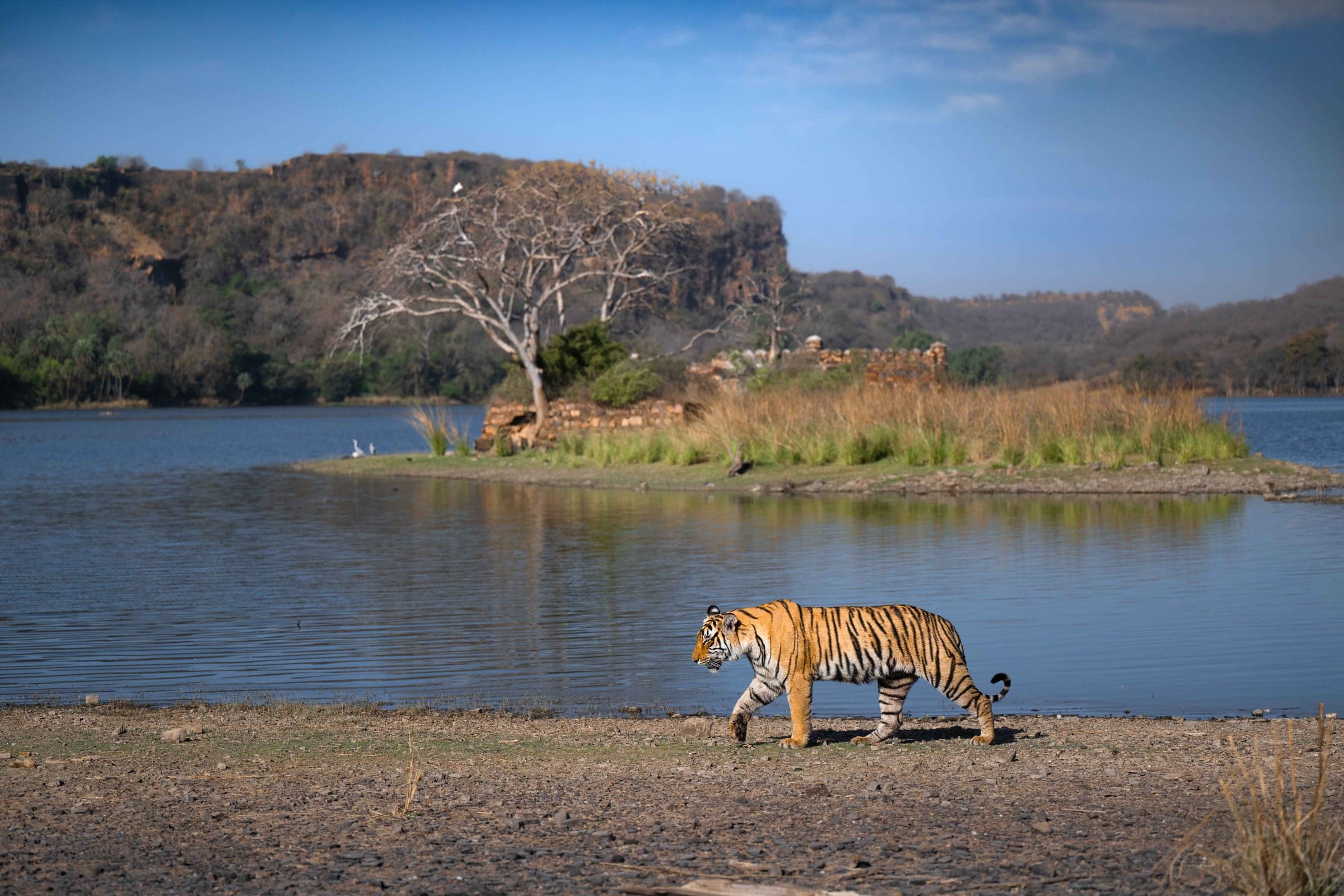
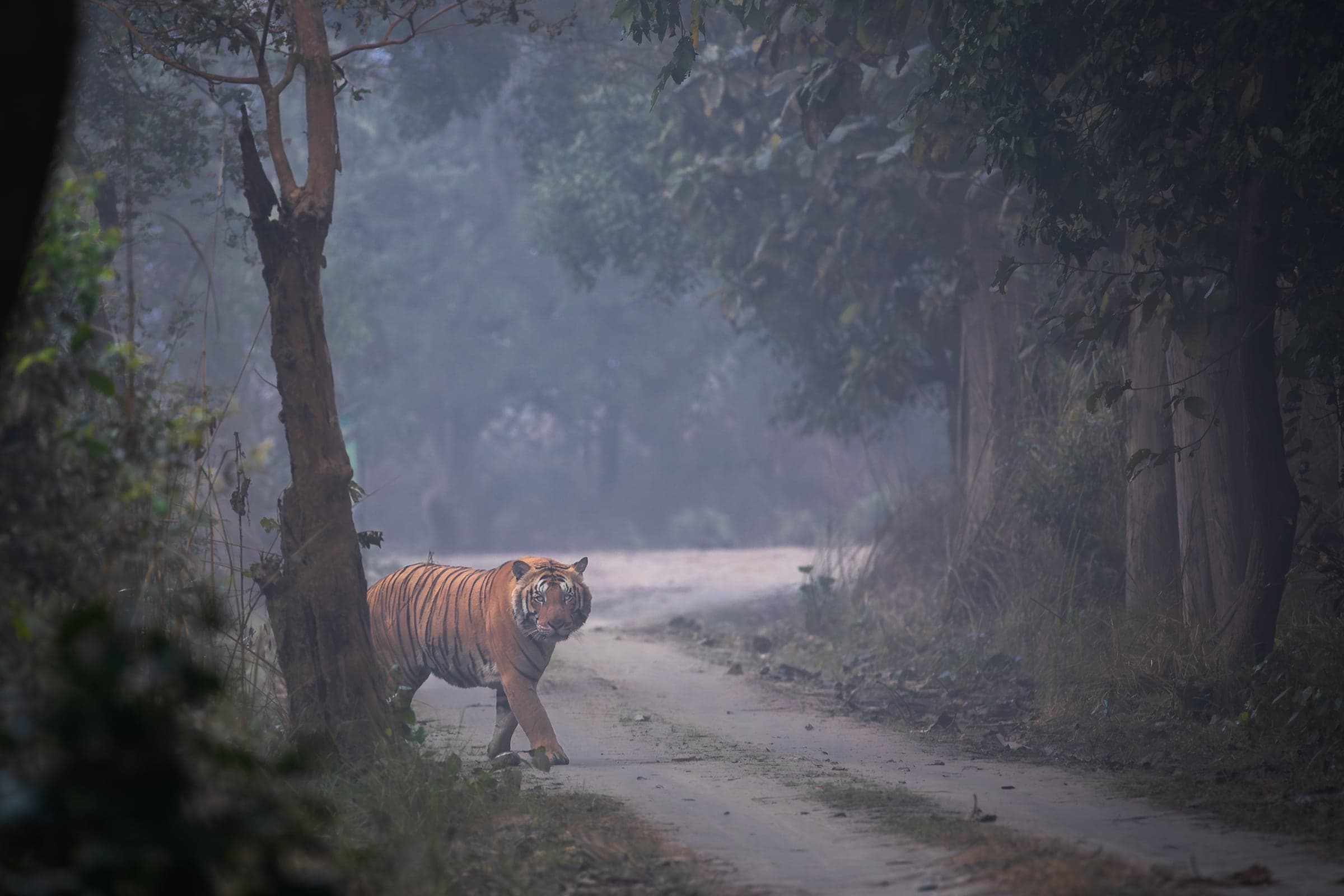
At the far northern edge of India, resides a land of dreamy proportion.In the Terai, forests loosen into grass, rivers wander without urgency, and mornings arrive wrapped in mist. Dudhwa Tiger Reserve and Pilibhit Tiger Reserve exist within this gentle geography, offering a tiger landscape that feels unguarded, intimate, and profoundly old. This is where the tiger walks without haste, often straight down endless forest roads, carrying the quiet authority of a land that belongs entirely to it.
Dudhwa protects a surviving reach of the Terai, where sal forest meets tall alluvial grass and wetland. The official tourism board identifies tiger, rhinoceros, swamp deer, elephant, hispid hare and Bengal florican among its conservation significance.
The landscape rewards guests who already understand that wildlife quality is not measured by big-cat frequency alone. Grassland, marsh and forest require different ways of looking, with enough time to appreciate the ecological whole.
Field notes
Three ways to readDudhwa.
A concise field guide to the landscape, its daily rhythm and the encounters that define it.
The landscape
Dudhwa, read slowly.
Terai sal forest, tall elephant grass, marsh, river systems and alluvial grassland near the Nepal border
Photo journal
Dudhwa,in frames.
Open any photograph to explore the collection in full screen.
Your private journey
Make your own Dudhwa plan.
Tell us what draws you here. We will shape the right season, access, pace and places into one coherent private journey.
Begin planningGood to know
Question, meet answer.
When is the best time to visit Dudhwa?
November to mid-June, with the coolest and most comfortable conditions generally from November to February
How long should I stay in Dudhwa?
3 nights, with additional time when including Kishanpur or Katarniaghat in the wider Terai landscape
What wildlife and habitat define Dudhwa?
Bengal tiger, greater one-horned rhinoceros, Asian elephant, swamp deer, leopard, hispid hare and Bengal florican habitat. The landscape is characterised by terai sal forest, tall elephant grass, marsh, river systems and alluvial grassland near the nepal border.
How do I reach Dudhwa?
Lucknow, followed by a private road transfer into the Dudhwa landscape. Road and rail approaches vary by lodge and park sector. Opening dates and safari permissions should be reconfirmed with the official eco-tourism authority.
What is a typical day in Dudhwa?
Morning and afternoon safaris through sal forest and grassland, with patient observation around marsh and rhino habitat.
Keep exploring
Places in the sameconversation.
Extend the journey through landscapes that share a natural rhythm, wildlife story or sense of place.