- Best for
- One of India’s most evocative habitats for tigers · Classic Central Indian landscape with eloquent winters and eventful summers · Rare species like hard-ground barasingha and dhole (Indian wild dog) · A rich sensory experience with plenty of large mammals, including gaur and sloth bear, and bird life
- Best months
- October to June
- Ideal duration
- 4 to 6 nights
- Getting there
- Fly to Jabalpur and drive to Kanha
Introducing Kanha
Enter an experience.
Kanha, far away from dramatic mountains or ancient fortresses, is where glory revels in silence. Sal trees rise in great columns from this Central Indian soil while bamboo fills the slopes and grasslands open up suddenly like the dense stretches of trees taking a deep breath.
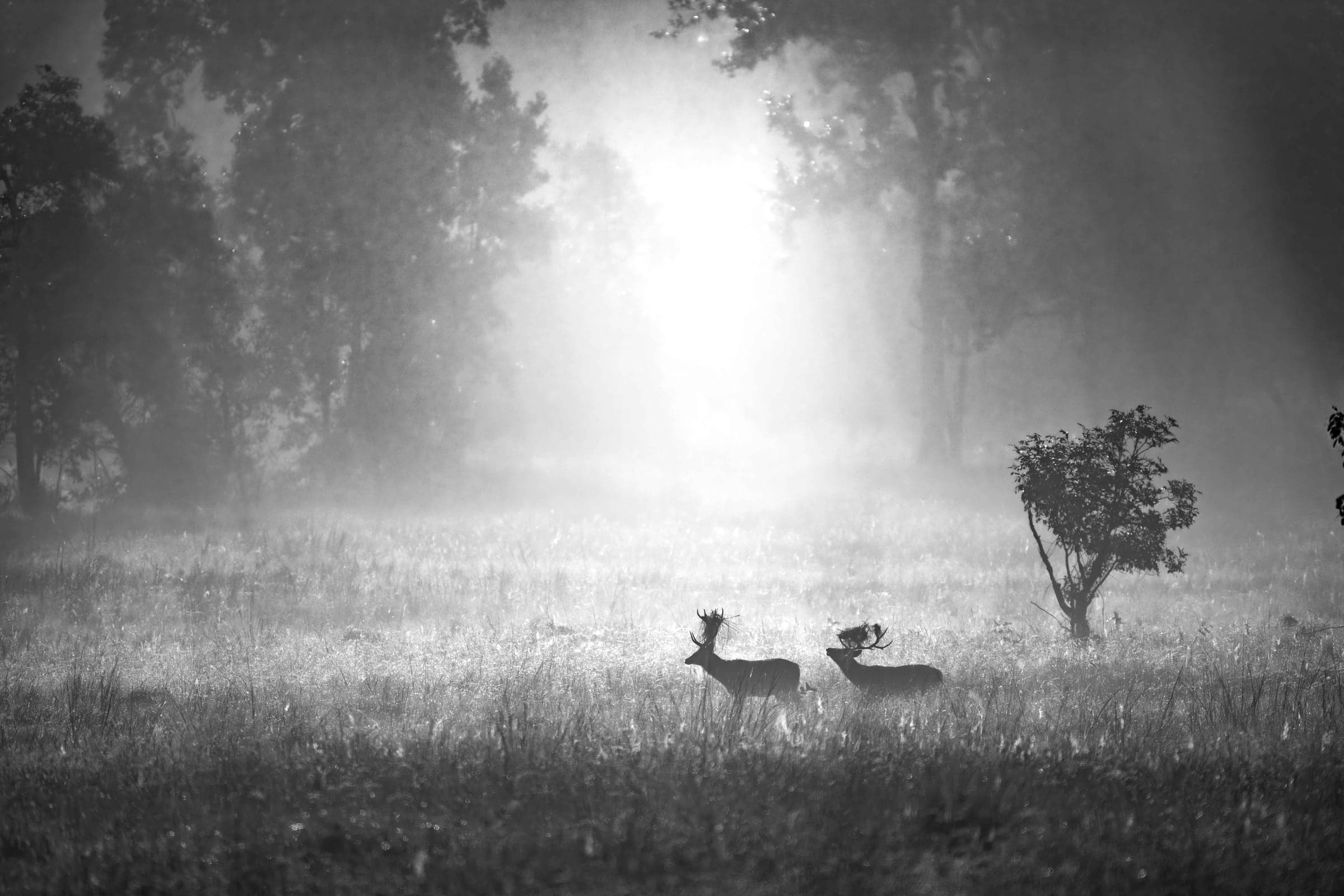
Streams gurgle through its valleys while, all the time, the light itself is a protagonist of this forest in its own right. For in the morning, it turns the meadows silver and the forest glows luminously in noon. At dusk, the sal trunks metamorphose into silhouettes and the calls of the jungle graze the grass gently like sound could touch something.
Field notes
Three ways to readKanha.
A concise field guide to the landscape, its daily rhythm and the encounters that define it.
The landscape
A land befitting a king.
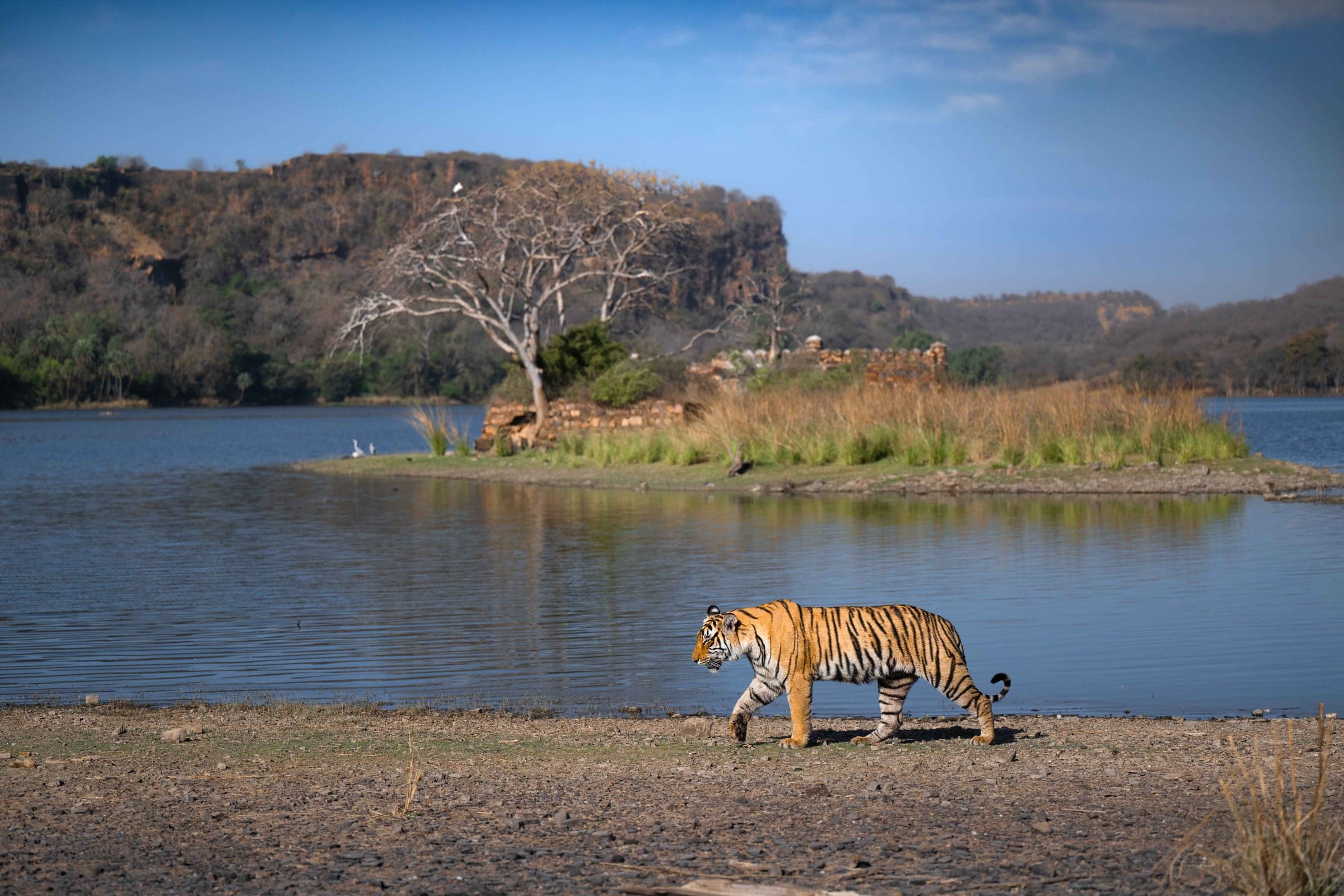
Kanha is an exceptional tiger landscape. But unlike some tiger reserves where the striped feline dominates every visual frame, here the forest often takes centre stage. You may see a tiger crossing an open meadow very afferently here, without forgetting the details surrounding the big cat. Even when it is walking through tall sal or resting beside water…
Photo journal
Kanha,in frames.
Open any photograph to explore the collection in full screen.
Your private journey
Make your own Kanha plan.
Tell us what draws you here. We will shape the right season, access, pace and places into one coherent private journey.
Begin planningGood to know
Question, meet answer.
What makes Kanha special?
Kanha combines an exceptionally beautiful landscape of sal forest, bamboo, open meadows and streams with outstanding wildlife. It is particularly important for tigers and the hard-ground barasingha, one of India's great conservation success stories.
Why is the barasingha so important?
The hard-ground barasingha was reduced to just 66 animals in the late 1960s. Conservation and habitat management in Kanha brought the population back from the brink, and the reserve is now its principal wild stronghold.
What else can I see besides tigers and barasingha?
Dhole, leopard, sloth bear, gaur, sambar, chital, barking deer, wild boar, langur and numerous smaller mammals occur here.
Is Kanha good for birding?
Yes. The reserve supports 200-plus bird species, with official sources recording species including crested serpent eagle, Indian roller, racket-tailed drongo, kingfishers, woodpeckers and numerous others.
What is the best time to visit Kanha?
The park is open roughly from October to the end of June. November to February offers the most pleasant weather, while April to June can provide particularly strong wildlife visibility as the forest dries and water becomes scarcer.
Is Kanha only about tiger sightings?
Absolutely not. The forest itself is one of the great attractions. Barasingha, dhole, gaur, sloth bear, birds, meadows and the extraordinary sal landscape make the destination rewarding even when a tiger does not appear.
Can I combine Kanha with other tiger reserves?
Yes. Kanha works particularly well as part of a Central India journey incorporating Bandhavgarh and/or Pench, allowing travellers to experience how dramatically different India's tiger landscapes can be.
How long should I stay?
Four to six nights is a good starting point. For photographers, serious naturalists or travellers combining several Central Indian reserves, I would recommend longer.
Is a tiger guaranteed?
No. Kanha offers excellent opportunities, but the tiger remains wild, as it should. The point of an expertly planned safari is to maximise the opportunity while ensuring that the forest, wildlife and experience remain rewarding regardless of what appears.
Keep exploring
Places in the sameconversation.
Extend the journey through landscapes that share a natural rhythm, wildlife story or sense of place.