- Best for
- Tigers in an extraordinary landscape · Excellent riverine life, headlined by gharial · The beautiful Ken (Karnavati) River in rugged habitat · 200+ bird species · Proximity to Khajuraho, a UNESCO World Heritage archeological site
- Best months
- October to June
- Ideal duration
- 3 to 5 nights
- Getting there
- Fly to Khajuraho and drive to Panna
Introducing Panna
Ken and able.
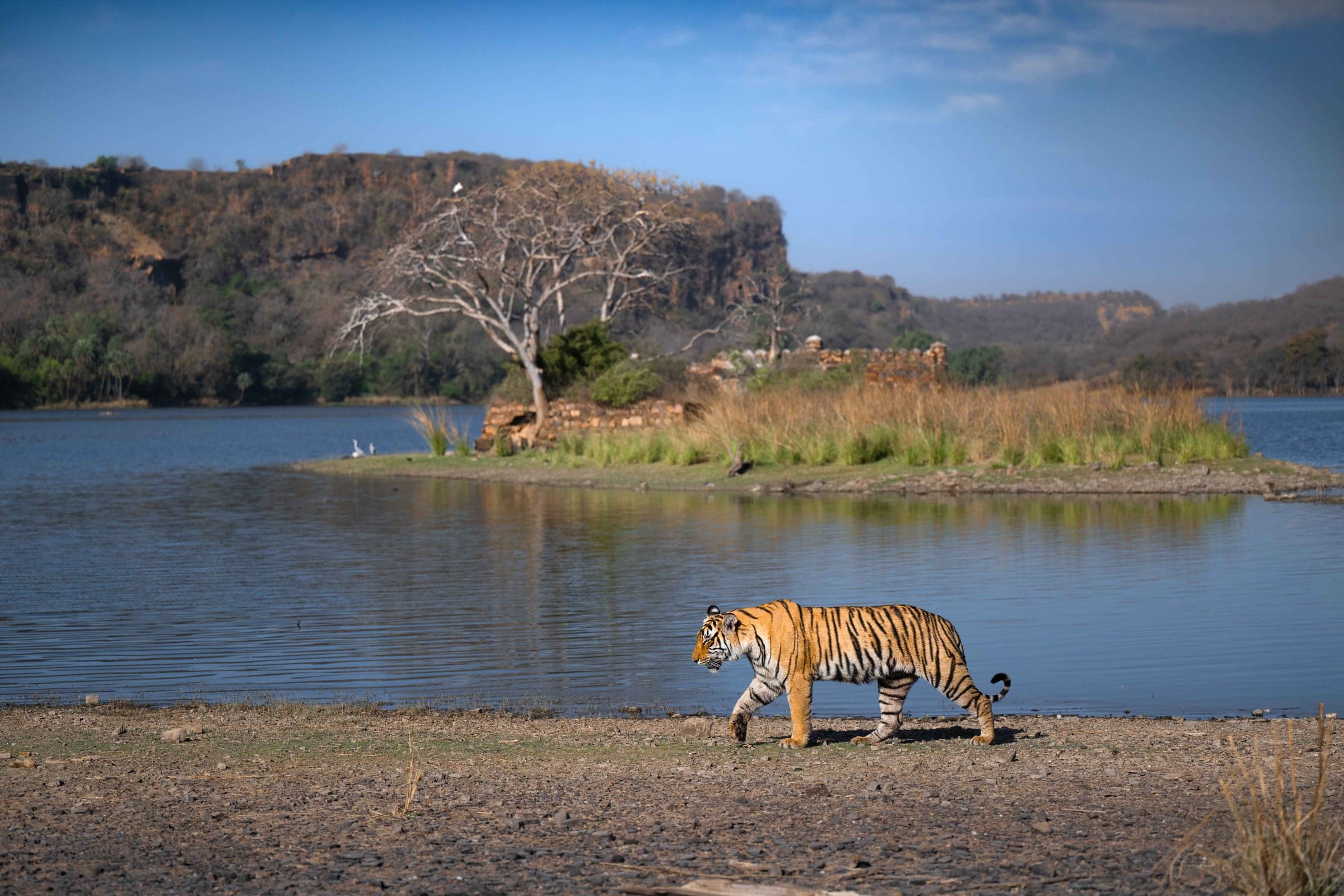
If most tiger reserves are known for their forests, Panna is well-known for its river. The Ken (Karnavati) cuts through the Vindhyan landscape, creating gorgeous gorges, stunning cliffs, delightful sandbanks and beautiful pools. And the forest looks like it is always rising from this geographically breathtaking land.
If crocodiles are known to bask not the banks, gharial can be found in the river system. Birds, too, visit the water here, just like all wildlife comes down to quench their thirst. In Panna, you witness a whole ecosystem shaped primarily by water.
And Panna's tiger story is remarkable. In the early 2000s, the reserve's tiger population collapsed because of poaching and other pressures. By 2009, it was effectively without tigers. Then came one of India's most ambitious tiger reintroduction efforts: tigers were translocated into Panna from other reserves and the population began to recover.
Today, Panna is celebrated as one of India's major tiger conservation success stories. That makes every tiger sighting here feel slightly different: every striped predator you see here is an outcome of a conservation story.
Field notes
Three ways to readPanna.
A concise field guide to the landscape, its daily rhythm and the encounters that define it.
The landscape
Set your clock to geological time.
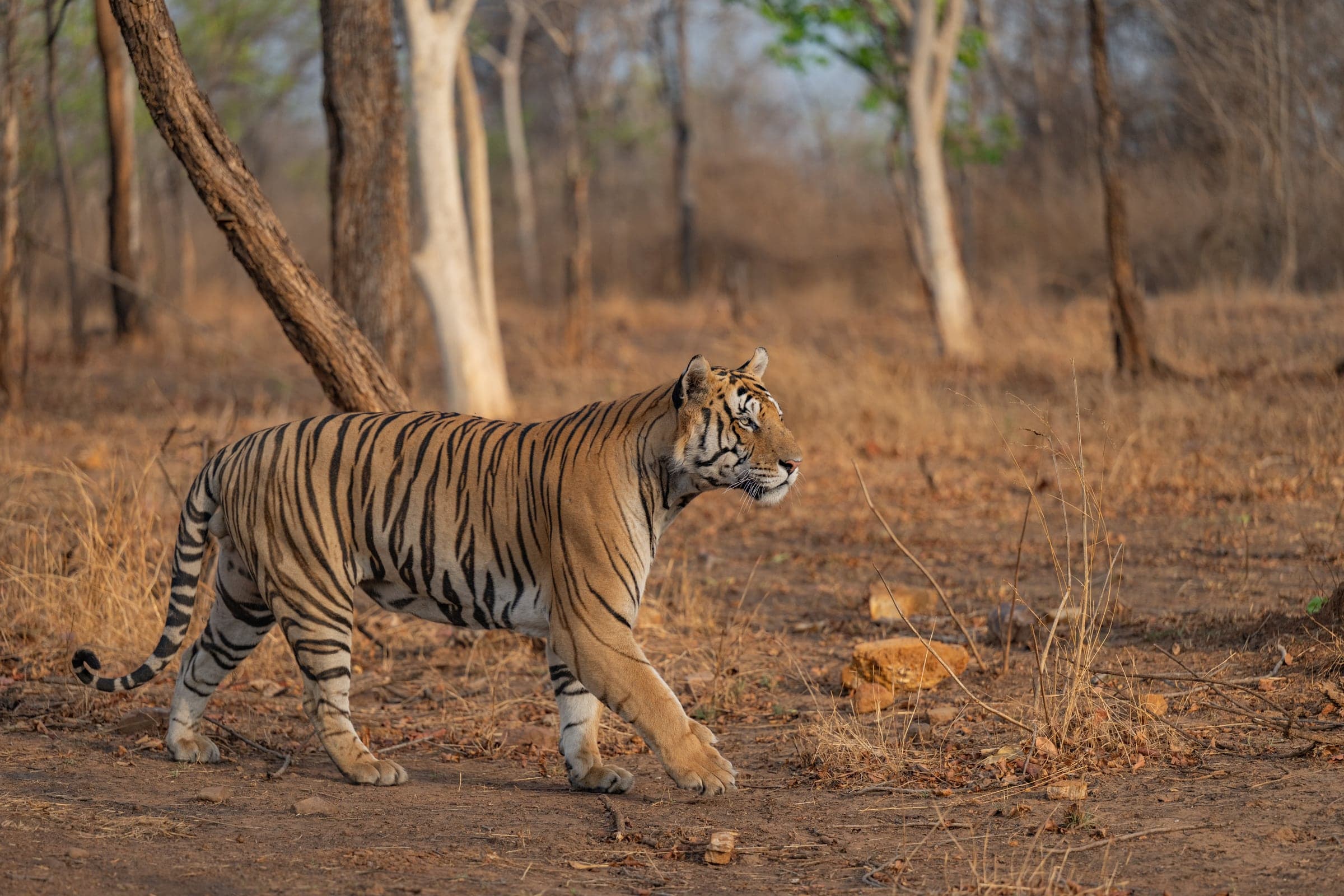
Panna is not exactly lush and that is part of its beauty. Here, the celebrated Vindhyan plateau breaks into valleys and ravines while dry deciduous forest stretches across the terrain. Teak, tendu, mahua and bamboo punctuate the landscape while ancient rock-faces rise above the Ken. Grasslands open up to you unexpectedly like gentle surprises. Panna feels ancient. Of…
Photo journal
Panna,in frames.
Open any photograph to explore the collection in full screen.
Your private journey
Make your own Panna plan.
Tell us what draws you here. We will shape the right season, access, pace and places into one coherent private journey.
Begin planningGood to know
Question, meet answer.
Why visit Panna?
Panna combines tiger country with the Ken River, dramatic Vindhyan terrain, gharial, crocodiles, vultures, rich birdlife and a remarkable tiger-recovery story. Its proximity to Khajuraho makes it particularly compelling as a wildlife-and-heritage journey.
What makes Panna different from Kanha and Bandhavgarh?
Kanha's great strength is its magnificent sal forest and barasingha; Bandhavgarh combines tiger country with its ancient fort and dramatic hills. Panna is river, ravine, rock and forest, with the Ken providing a completely different dimension to the wildlife experience.
Can I see tigers in Panna?
Most likely. Panna has a healthy tiger population today following a major reintroduction and recovery programme after the local population collapsed in the 2000s.
What else can I see?
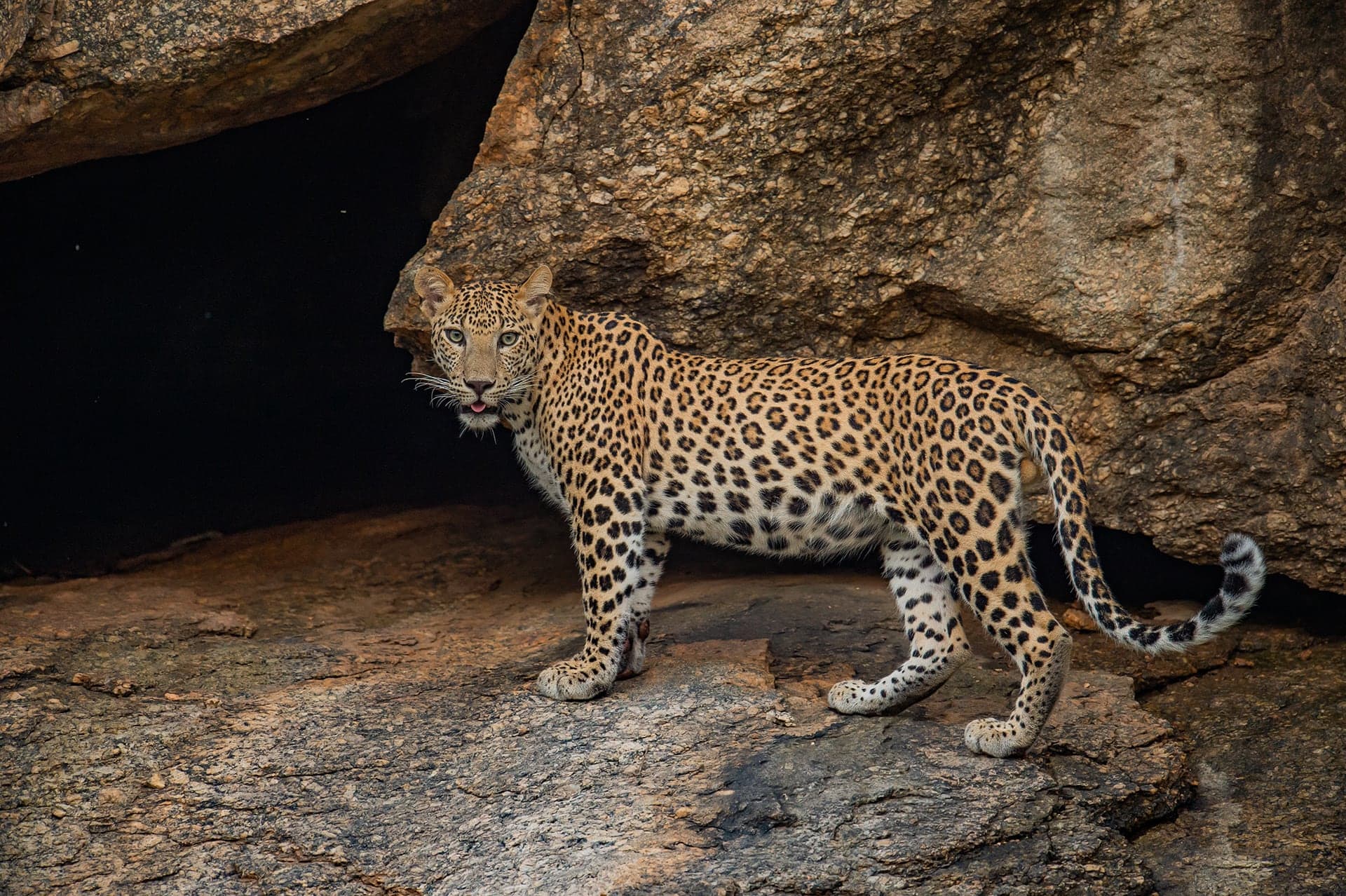
Leopard, sloth bear, dhole, gaur, sambar, chital, wild boar, gharial, mugger crocodile and numerous bird species are among the highlights.
Is Panna good for birding?
Very much so. More than 200 bird species have been recorded, with the river, forest, grasslands and cliffs creating several different bird habitats.
Can I see gharial?
The Ken River supports gharial, alongside mugger crocodiles and other riverine wildlife. Sightings depend on conditions, season and location.
Can Panna be combined with Khajuraho?
Absolutely. And we strongly recommend considering it. The proximity of the two makes for an unusually elegant combination of wildlife and heritage. Khajuraho's extraordinary temple complex is a UNESCO World Heritage Site.
When is the best time to visit?
October to June. December–February offers comfortable conditions, while March–June generally provides stronger wildlife visibility as the forest dries and water becomes increasingly important.
How long should I stay?
Three to five nights works well for Panna itself. Add additional time if combining it with Khajuraho or another Central Indian tiger reserve.
Is a tiger guaranteed?
No. And, as always, we would never suggest otherwise. The tiger population is healthy here and the opportunities can be excellent, but the reserve is — and remains — a wild landscape.
Keep exploring
Places in the sameconversation.
Extend the journey through landscapes that share a natural rhythm, wildlife story or sense of place.