- Best for
- A ridge in the Eastern Himalaya exceptionally rich in birdlife and rare Himalayan mammals · One of the world’s best places to see the elusive and endangered red panda · Breathtaking views of the Kangchenjunga, the world’s third highest mountain, in ‘Sleeping Buddha’ form · Views of Mount Everest and Makalu · Stunning rhododendron-studded views in spring · Cross pollination of Indian and Nepali Buddhist culture along the border · Exotic orchids and other flora in picture-postcard settings
- Best months
- November to May
- Ideal duration
- 4–6 nights
- Getting there
- Road from Bagdogra/Siliguri via Darjeeling and Maneybhanjan
Introducing Singalila
Red pandas and rare ponders.
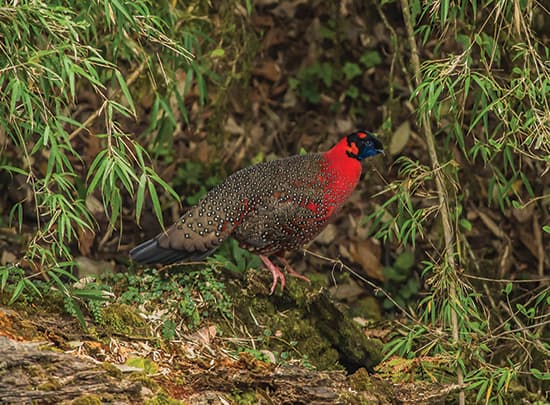
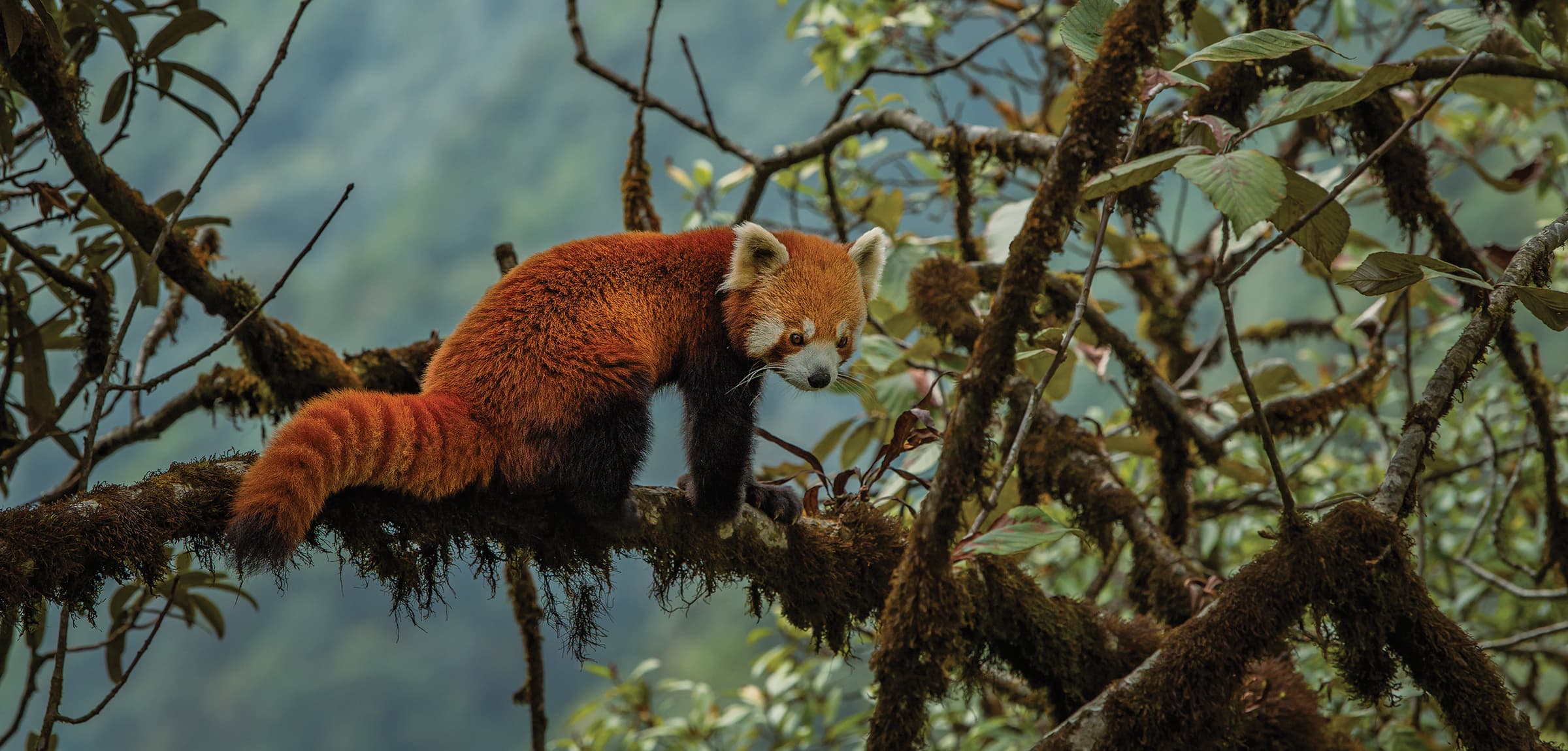
Rhododendrons pierce the mist like a delicious hurt. Bamboo sway in the zephyr while suddenly, a satyr tragopan may cross a less-trodden forest trail or a fire-tailed myzornis may flit about fleetingly in the canopy. And somewhere in the thick of things lives one of the Himalaya's most elusive animals: the red Panda. Elusive, enigmatic and beloved, the red panda tops the long list of all forms of life — flora and fauna — one can behold in Singalila.
Field notes
Three ways to readSingalila.
A concise field guide to the landscape, its daily rhythm and the encounters that define it.
The landscape
A forest painted red by a panda.
There are wild places where a quest, a dream itself becomes an experience. Singalila is one of them. Its high-altitude forests of bamboo, oak, rhododendron, magnolia, conifers and other Himalayan trees make the world a gentle place here. Moss cloaks branches – standing as well as fallen. Orchids and other stunning plants appear suddenly, unexpectedly along the walking…
Photo journal
Singalila,in frames.
Open any photograph to explore the collection in full screen.
Your private journey
Make your own Singalila plan.
Tell us what draws you here. We will shape the right season, access, pace and places into one coherent private journey.
Begin planningGood to know
Question, meet answer.
Why is Singalila famous for red pandas?
Singalila contains high-altitude bamboo-rich forests that happen to be important red panda habitats. The species has been studied extensively here, with research showing a strong association with bamboo cover and forest structure.
What other mammals can I see?
Depending on season and location, Singalila is also home to Himalayan black bear, leopard, clouded leopard, serow, barking deer, leopard cat, yellow-throated marten, wild boar, pangolin and other mammals.
Is Singalila good for birding?
Exceptionally! The park's birdlife includes blood pheasant, satyr tragopan, Kalij pheasant, Himalayan griffon, golden eagle, spotted nutcracker, scarlet minivet, woodpeckers, parrotbills, fulvettas and many other Himalayan species.
What makes Singalila different from other red panda destinations?
The combination of red panda habitat, exceptionally rich Himalayan birdlife, rhododendron and bamboo forests, high ridges and spectacular Himalayan views gives Singalila a distinctive character. It is as much a forest and birding experience as a red panda expedition.
Can I combine red panda watching with trekking?
Absolutely! Singalila is historically a trekking landscape, with routes towards Sandakphu and Phalut passing through the park. In fact, as you walk, you might see a line of trekkers crossing paths with you.
How long should I spend here?
Four to six nights is a good starting point for a dedicated wildlife and birding journey. Dedicated photographers and birders may want longer.
Will I definitely see a red panda?
Not a guarantee. Red pandas are elusive and their forest habitat can make them extraordinarily difficult to locate. The quality of the experience depends on patient searching, habitat knowledge, season and luck.
Keep exploring
Places in the sameconversation.
Extend the journey through landscapes that share a natural rhythm, wildlife story or sense of place.