- Best for
- Exceptionally frequent tiger sightings · Picturesque teak and bamboo forest interspersed with grasslands · Co-predators like leopard and dhole · Rich mammal and bird life · The Andhari river and Irai backwaters
- Best months
- October – June
- Ideal duration
- 4–6 nights
- Getting there
- Fly to Nagpur and drive onwards to Tadoba
Introducing Tadoba
A court of close encounters
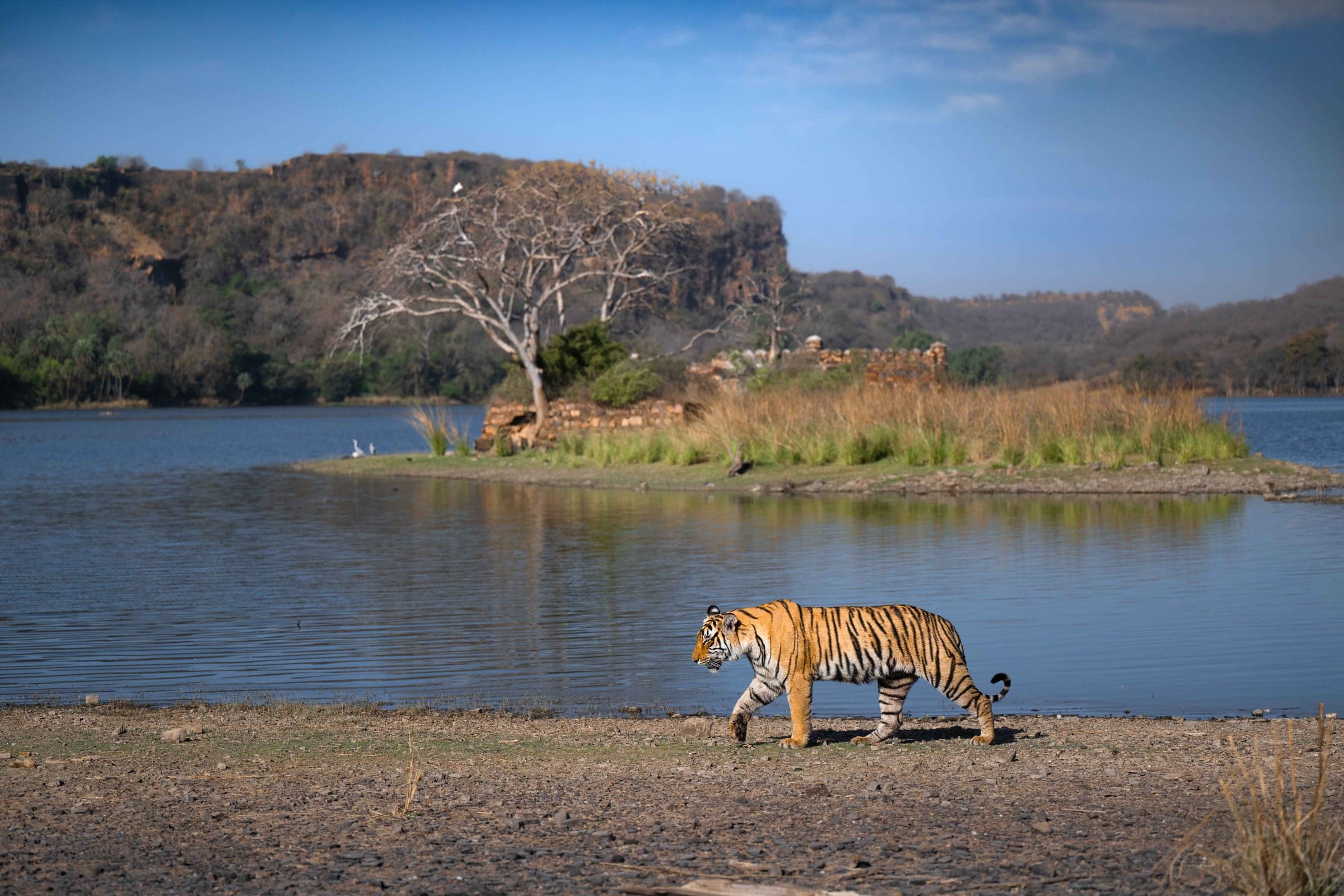
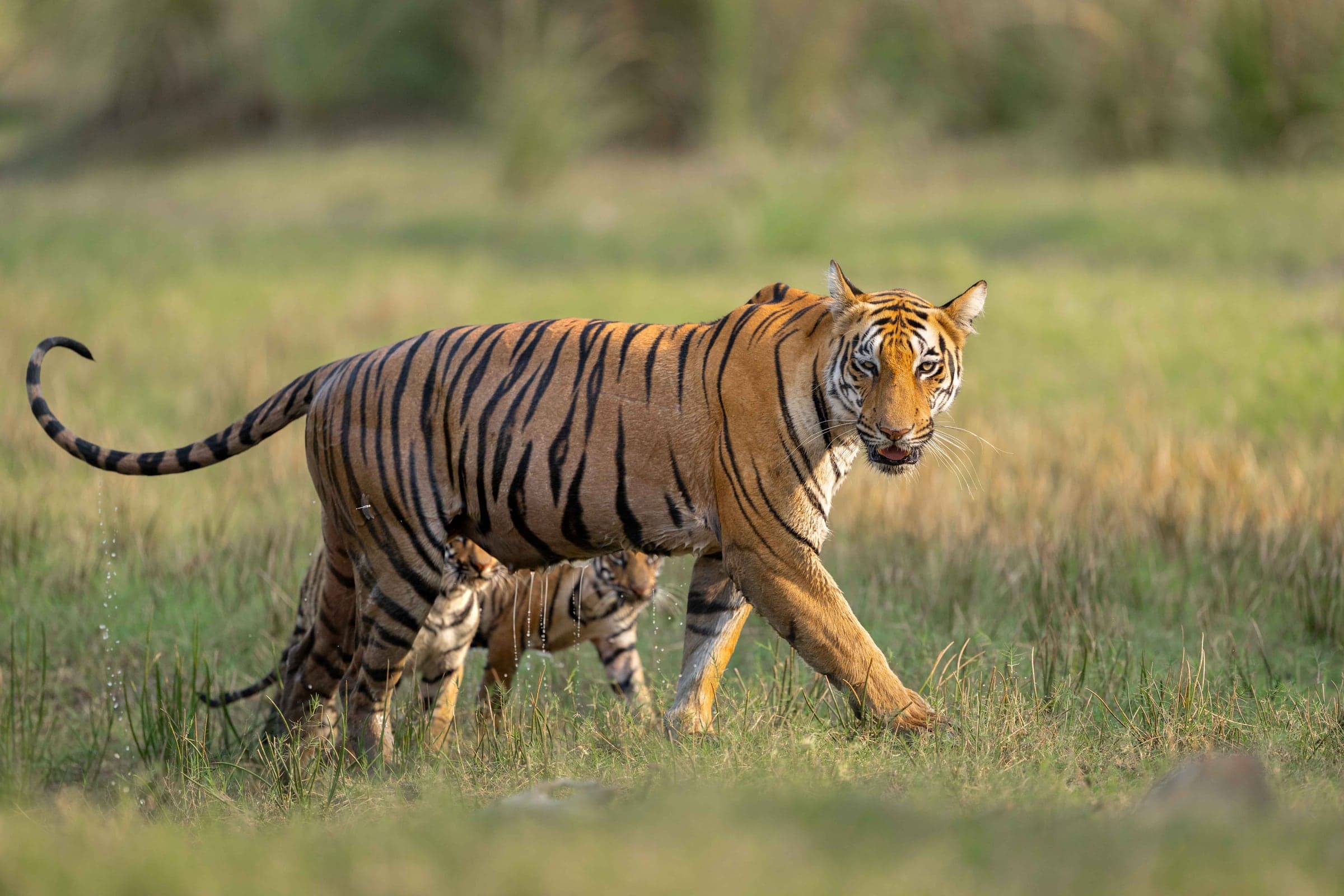
While the sheer scale of some tiger parks can overwhelm you, Tadoba is a place that holds the possibility of close encounters with wildlife. A tiger may walk out of the bamboo only a few yards away from you, with hardly anything between you and it.
Field notes
Three ways to readTadoba.
A concise field guide to the landscape, its daily rhythm and the encounters that define it.
The landscape
A forest that’s not merely a backdrop.
Tadoba does not have a grand scale. It does not need it. Its drama comes rather from proximity, in its dry deciduous forest where, also, teak rises above bamboo and water is often surrounded by grasslands. Rocky outcrops crop up like delightful interruptions to the trees, a lake reflects the sky. And there is life everywhere. Chital in…
Photo journal
Tadoba,in frames.
Open any photograph to explore the collection in full screen.
Your private journey
Make your own Tadoba plan.
Tell us what draws you here. We will shape the right season, access, pace and places into one coherent private journey.
Begin planningGood to know
Question, meet answer.
Why is Tadoba so famous for tigers?
Tadoba-Andhari has developed a reputation for exceptionally strong tiger numbers and density. The official reserve currently describes more than 90 tigers in the reserve, while recent monitoring has recorded very high tiger density.
What else can I see?
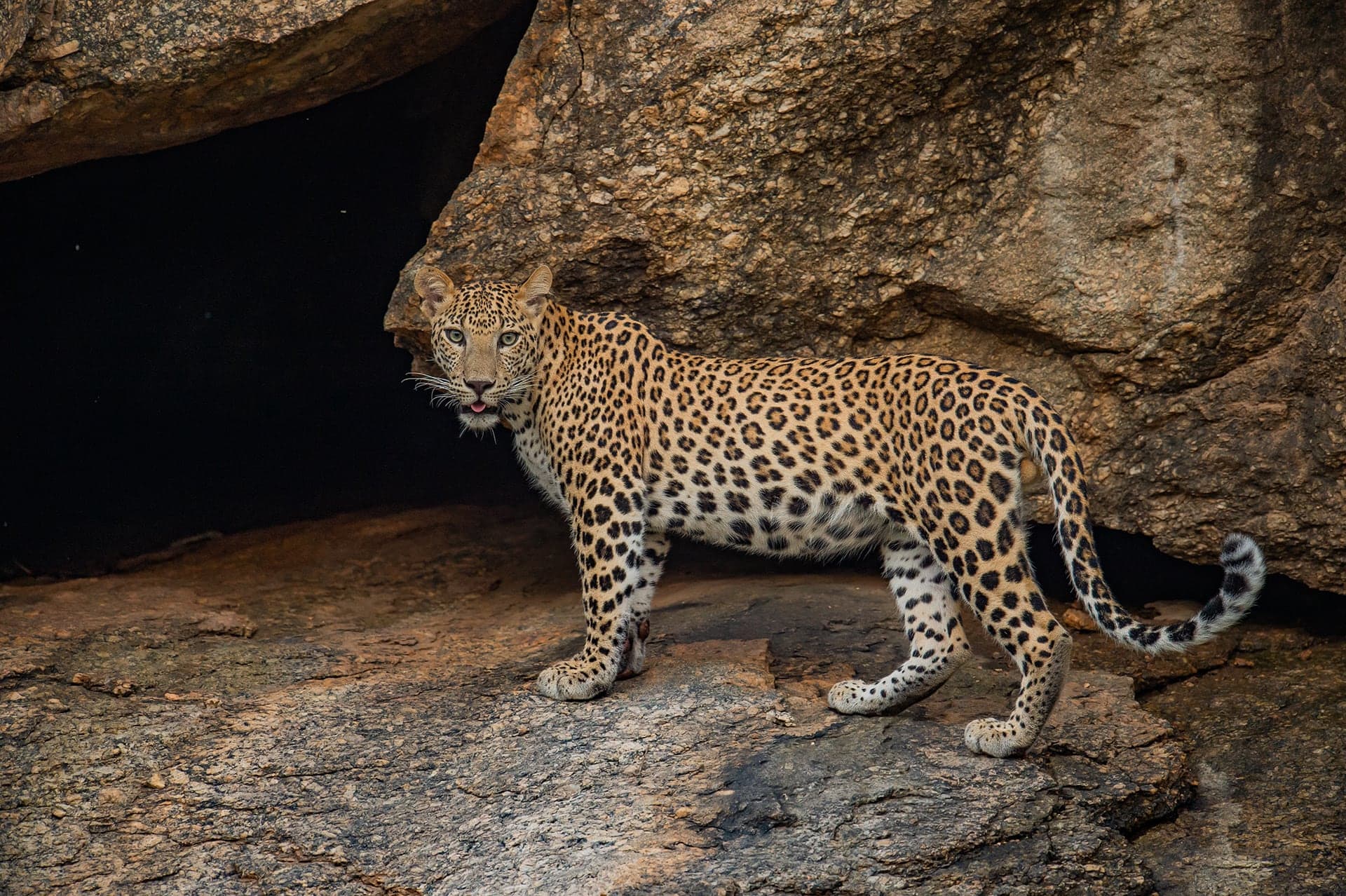
Leopard, dhole, sloth bear, gaur, sambar, chital, barking deer, chousingha, wild boar and marsh crocodile are among the notable wildlife species.
Is Tadoba good for birding?
Exceptionally. About 280 bird species are known to inhabit the reserve, making it one of the more diverse birding landscapes in Central India.
What makes Tadoba different from Kanha?
Kanha is a more expansive, beautiful forest landscape of sal, bamboo and meadows, with the barasingha as one of its great attractions. Tadoba is drier, more immediate and more water-driven, with teak and bamboo, lakes and a particularly strong concentration of large mammals and predators.
What makes Tadoba different from Bandhavgarh?
Bandhavgarh has the extraordinary additional dimension of its ancient fort, archaeological landscape and rocky hills. Tadoba is much more elemental, and its great strength is the immediacy of the wildlife experience.
When is the best time to visit?
October to June. The cooler months are more comfortable, while March to June can offer increasingly strong wildlife visibility as the forest dries and water becomes more important. The reserve closes during the monsoon.
How many days should I stay?
Four to six nights is a strong starting point. If tiger photography is the primary purpose, more nights allow you to take advantage of Tadoba's different zones and changing wildlife opportunities.
Are tigers guaranteed?
No. As it should be, because they are wild animals. Tadoba can offer exceptional opportunities, but responsible safari planning should never turn a high probability into a promise.
Can Tadoba be combined with other Indian wildlife destinations?
Very easily. It works rewardingly well within a Central India wildlife circuit, especially alongside Kanha, Bandhavgarh or Pench.
Keep exploring
Places in the sameconversation.
Extend the journey through landscapes that share a natural rhythm, wildlife story or sense of place.